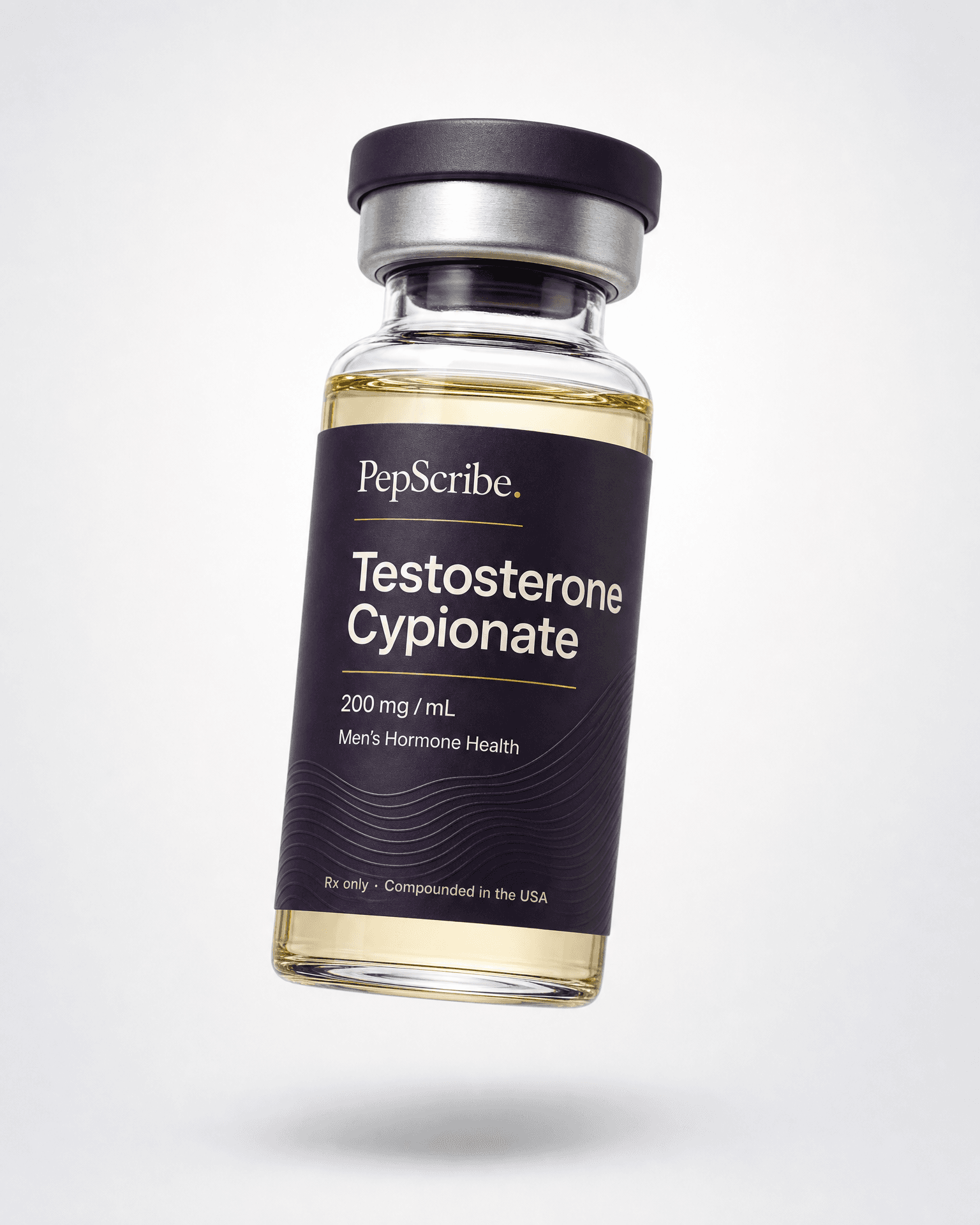
Testosterone replacement therapy. Dosed to your labs, monitored over time.
Starting from
No membership fee.
Free online visit. You only pay when prescribed.
Testosterone therapy online, starting with bloodwork and a DEA-registered prescriber. Baseline labs first, then a protocol matched to your numbers and follow-up labs every three to six months. Compounded in the USA by licensed 503A pharmacies. No hidden overseas supply chain.
- DEA-registered clinician
- Baseline labs required
- Ongoing monitoring
- Compounded in the USA
Compounded drug products are not approved or evaluated for safety, effectiveness, or quality by the FDA. Rx required.
Ways to take it
One program, the format that fits your life
Testosterone can be prescribed in several forms. Your clinician confirms the right one from your labs and history, but here is how they compare so you know what to expect. Every form is compounded in the USA by a licensed 503A pharmacy under your individual prescription.

What it is
Prescription testosterone, confirmed by labs
Testosterone replacement therapy is the clinician-supervised use of prescription testosterone to address a clinically confirmed deficiency. Testosterone is a Schedule III controlled medication, so it is prescribed only by a US-licensed, DEA-registered clinician, and only after baseline labs confirm that your levels and your symptoms line up.
The medication itself is compounded in the USA by a licensed 503A pharmacy, based on the protocol your clinician prescribes. You know who wrote the prescription, where the medication came from, and what is being measured along the way. No hidden overseas supply chain.
Compounded testosterone is not an FDA-approved drug, and TRT is not appropriate for everyone. Your clinician confirms the need with labs before prescribing, then keeps tracking the numbers that matter as treatment continues.
How the process works
Labs first, prescriber of record, monitoring throughout
Baseline labs come first
Before any prescription, baseline bloodwork is required to confirm low testosterone and to establish your starting point on hematocrit, estradiol, PSA, and lipids. A clinician reviews your labs alongside your symptoms and health history. No labs, no prescription.
A clinician of record prescribes
If treatment is appropriate, a US-licensed, DEA-registered clinician prescribes a protocol matched to your labs and history. Where clinically appropriate, companion compounds may be added: hCG to help preserve testicular function, anastrozole to help control estradiol, or enclomiphene as a fertility-preserving alternative protocol.
Monitoring over time
TRT is ongoing care. Your clinician schedules follow-up labs every three to six months and monitors hematocrit, estradiol, PSA, and lipids, adjusting the protocol as your numbers and how you feel evolve.
Sourcing and safety
Known prescriber, known pharmacy, known numbers.
Testosterone is a controlled medication. You know who writes the prescription, which licensed 503A pharmacy compounds it, and what gets measured over time.
DEA-registered prescriber
Testosterone is a DEA Schedule III controlled medication. It is prescribed by a US-licensed, DEA-registered clinician who is the prescriber of record, never dispensed on request without a clinical decision.
Compounded in the USA
Your medication is compounded in the USA by a licensed 503A pharmacy. No hidden overseas supply chain, no medication of unknown origin.
Monitored with real labs
Baseline labs are required before any prescription, and follow-up labs run every three to six months. Your clinician tracks hematocrit, estradiol, PSA, and lipids so the protocol stays matched to your physiology.

Who it's for
For men who want a lab-based answer, with a clinician who follows up.
TRT is for men whose symptoms of low testosterone are confirmed by bloodwork. Eligibility is a clinical decision made by your prescriber after reviewing your labs and history.
- You are roughly 35 to 58 and persistent fatigue or low energy is not explained by sleep or training alone
- Libido has declined in a way that feels out of character
- Strength and body composition are changing despite consistent effort
- Recovery from training or daily exertion is slower than it used to be
- Mood, motivation, or focus has flattened and you want your levels checked
Every protocol is reviewed by a licensed clinician and prescribed only when appropriate. If TRT is not the right fit for you, or your state does not support telehealth initiation of Schedule III medications, no prescription is issued and you are never charged for a medication you were not prescribed.
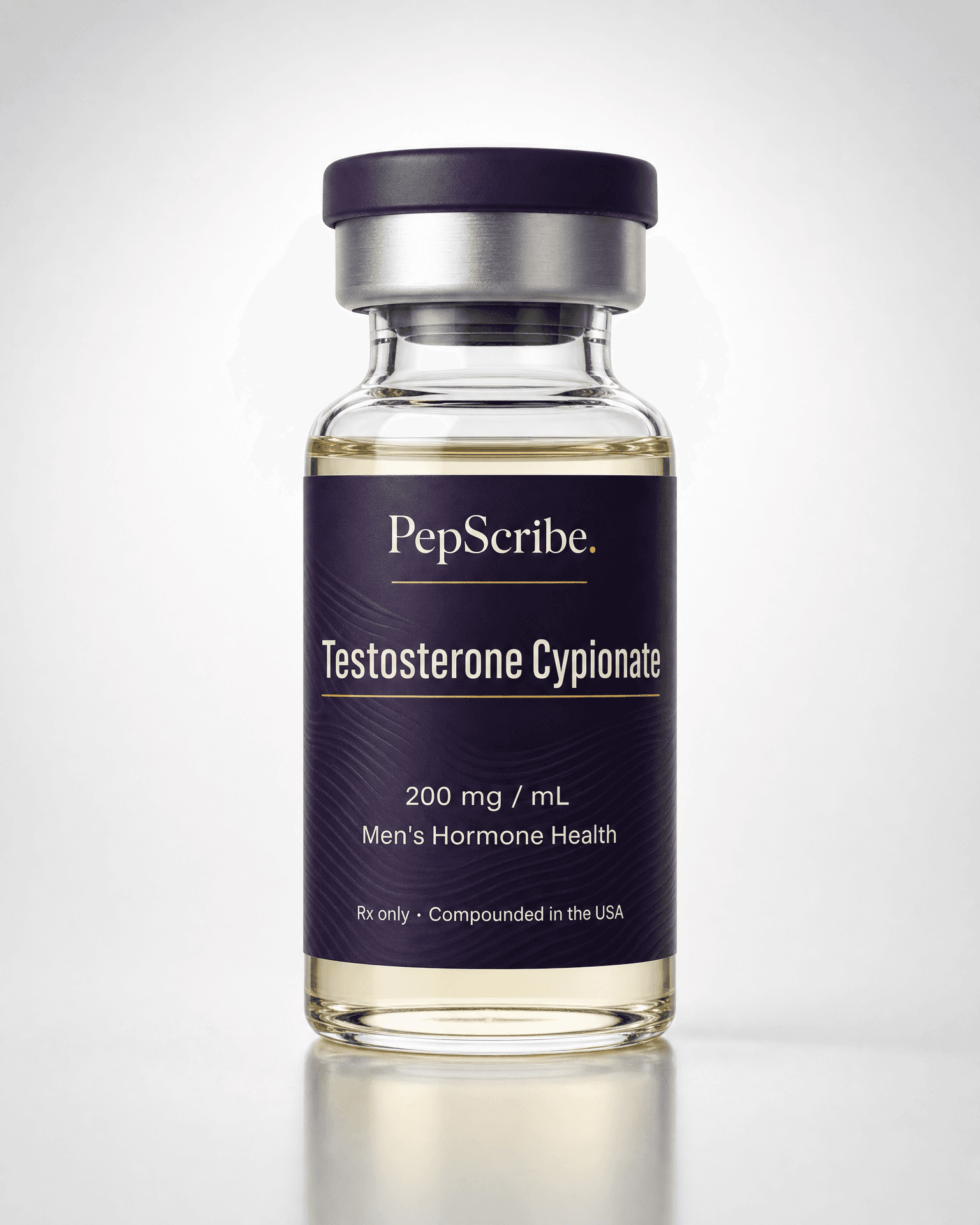
What you receive
A clinician-led program built around your labs
Your online visit is free. You only pay if a clinician prescribes, and one monthly price then covers the medication, the clinical care, and shipping.
- A free online visit with a US-licensed, DEA-registered clinician, plus a baseline lab review to confirm low testosterone and establish your starting numbers
- A protocol prescribed by a US-licensed, DEA-registered clinician when appropriate
- Medication compounded in the USA by a licensed 503A pharmacy
- Companion compounds where clinically appropriate, such as hCG, anastrozole, or enclomiphene
- Follow-up labs every three to six months with monitoring of hematocrit, estradiol, PSA, and lipids
- Discreet shipping and an ongoing line to your care team for questions and adjustments
Starting from
No membership fee.
Free online visit. You only pay when prescribed.
- Cancel anytime
- No insurance needed
- Discreet shipping
- HSA/FSA eligible
Compounded testosterone is not an FDA-approved drug. TRT is a Schedule III controlled medication, and telehealth initiation of Schedule III medications is not available in every state. Eligibility, dosing, and any companion compounds are determined by a licensed clinician based on your labs and health history.
Compounded drug products are not approved or evaluated for safety, effectiveness, or quality by the FDA. Rx required.
TRT questions
Things people ask before they sign up.
If something is not here, reach out, we'd rather answer it plainly than have you guess.
What happens if I am not approved for TRT?
The online visit is free, so there is nothing to refund. You are never charged for a medication you were not prescribed. A clinician may decide TRT is not the right fit for you.
Is compounded testosterone FDA-approved?
No. Compounded testosterone is not an FDA-approved drug. It is prescribed by a US-licensed, DEA-registered clinician and compounded in the USA by a licensed 503A pharmacy. We never imply FDA approval for compounded medications.
Do I need bloodwork before starting?
Yes. Baseline labs are required before any testosterone prescription. The clinician uses your bloodwork to confirm low testosterone and to establish your starting values for hematocrit, estradiol, PSA, and lipids. There is no prescription without labs.
How often will my labs be monitored on TRT?
Your clinician schedules follow-up labs every three to six months and monitors hematocrit, estradiol, PSA, and lipids over time. The protocol is adjusted as your numbers and your symptoms evolve. Monitoring is included in the program.
What do labs cost?
Uploading recent lab results (from the last 6 to 12 months) is free. If you need bloodwork, PepScribe orders a baseline panel for $129, drawn at a LabCorp location near you. Your clinician reviews the results before prescribing.
Can I get TRT online through telehealth?
TRT can be initiated through a clinician-led telehealth assessment in states that permit it. Because testosterone is a Schedule III controlled medication, telehealth initiation is not available in every state. If your state does not support it, no prescription is issued and you are never charged for a medication you were not prescribed.
What are hCG, anastrozole, and enclomiphene used for?
These are companion compounds a clinician may add where clinically appropriate. hCG may be used to help preserve testicular function during therapy, anastrozole may be used to help control estradiol, and enclomiphene is sometimes used as a fertility-preserving alternative protocol. Your clinician decides whether any of these fit your situation.
How is this different from buying testosterone elsewhere online?
Here, a US-licensed, DEA-registered clinician is the prescriber of record, baseline labs are required, the medication is compounded in the USA by a licensed 503A pharmacy, and your hematocrit, estradiol, PSA, and lipids are monitored over time. There is no hidden overseas supply chain and no medication of unknown origin.
How much does TRT cost?
The online visit is free. If a clinician prescribes, testosterone therapy plans start from $79/mo, and you see the exact plan price before you pay anything. One price includes the medication, clinician care, and shipping. Plans are HSA and FSA eligible. Lab fees may apply separately depending on your state and the labs used.
Start with your labs.
Take the free assessment. If a clinician confirms low testosterone and TRT is appropriate, your protocol is prescribed and monitored over time. If not, you are never charged for a medication you were not prescribed.